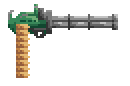
Check the equipped weapon’s penalty
| Weapon | Hands before reductions | Movement penalty while held |
|---|---|---|
| Knife | 1 | No listed penalty |
| Katana | 2 | −10% |
| Minigun | 2 | −30% |
Plasma Hand removes the hand-capacity obstacle to equipping many weapons, but each weapon’s movement penalty still applies. Compare the Movement Speed display before and after equipping the next gun. If the extra weapon makes the bus approach unsafe, keep the stronger supported attack and move the extra weapon into storage.
Hand count does not set the penalty: both are two-handed, yet Katana costs 10% movement and Minigun 30%.
Maximum Armor slows movement
Each point of maximum Armor reduces movement speed by 3%, up to fifteen Armor. The cost uses the maximum you carry. Taking hits and spending those points leaves the slowdown in place. Five maximum Armor gives a movement factor of 0.85. Fifteen gives 0.55.
With no movement bonuses, freezing or weapon penalty, the base 6.3 m/s becomes 5.36 m/s at five Armor and 3.47 m/s at fifteen, rounded to two decimals. Account for that cost when Body Armor or a Shield Generator lets you sustain more hits.
Restore an escape route
Check the slow weapon, maximum Armor and any movement status separately. A frozen survivor moves at 20% speed and cannot dash until the freeze ends. Movement bonuses and more stamina solve different shortages. Spring supplies dash capacity, while Walking Shoes can support a movement-trigger build.
Before accepting another weapon with Plasma Hand, check the route back to the bus with the full equipment active. The hand-capacity guide compares the equipment that enables the extra weapons.