Pandora’s Box transforms every Strike and Defend, so an enchanted starter is part of the cost of choosing it, even when its replacement is a more useful card.
An upgraded target does not always stay upgraded
Permanent transformations of an upgraded, removable, eligible card. No extra upgrade-on-obtain relic changes the result.
- Ordinary random transformUpgrade is lostThe original card is replaced by a fresh card. Its enchantment is also lost.
- Claws makes Maul
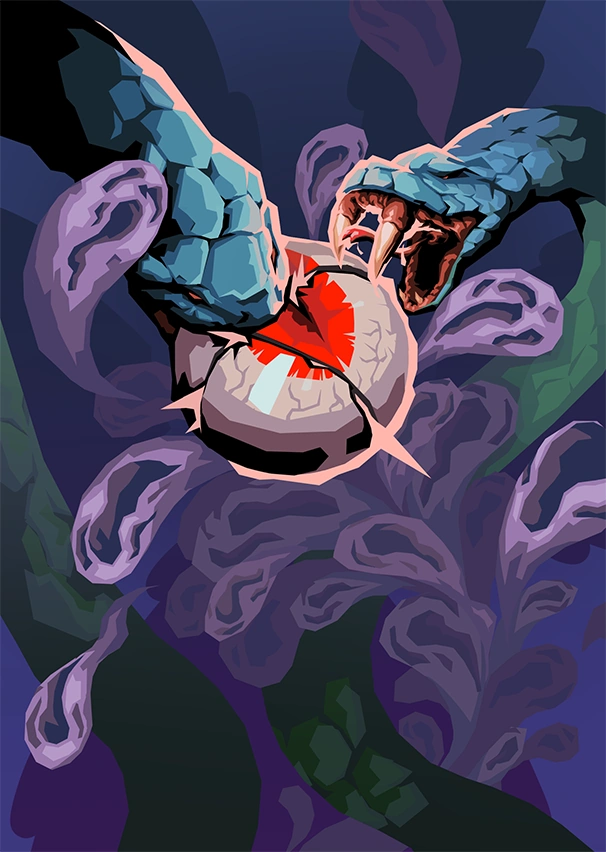 Upgraded target → Maul+This named Ancient conversion preserves upgrades and compatible enchantments.
- Archaic Tooth
 Starter upgrade preservedIts named starter conversion is another specific exception. Eligibility still matters.
Which card should you transform?
An unupgraded, unenchanted starter is often a less expensive target than an upgraded card that already solves a fight. Compare the card’s present role with the range of replacements, rather than treating every starter as equally disposable.
For example, Spiraling Whirlpool can give a basic Defend Replay. That Defend is no longer equivalent to the untouched copy beside it. A random transform replaces that Defend and loses its Replay enchantment. If you only need to remove an ordinary Strike, selecting the enchanted Defend sacrifices more without guaranteeing a better replacement.
The same applies to an early damage common that has become less useful. Transforming it may be reasonable, but the new card will not normally inherit the Smith upgrade you spent on it. Compare that gamble with a guaranteed card removal when both options are available.
Named Ancient transformations have exceptions
| Effect | Upgrade and enchantment treatment |
|---|---|
| Ordinary random transformation | The original upgrade and enchantment are lost. |
| Pandora’s Box | Transforms the starters; does not preserve their investment by default. |
| Claws transforming selected cards into Maul | Preserves upgrades and compatible enchantments. |
| Archaic Tooth’s named starter transformation | Preserves the starter’s upgrade and compatible enchantment. |
Claws turns up to six selected cards into Maul. An upgraded target can produce Maul+, so the choice is different from an ordinary random transform. Maul deals damage twice and increases the damage of all Maul cards during the combat; upgraded Maul also improves that shared increase. Several copies therefore have a concrete interaction beyond merely being new Attacks.
Compatible enchantments carry over; others do not. Spiral is restricted to basic Strikes and Defends, and a Maul is neither. Archaic Tooth’s exception covers its named starter conversion only; other Ancient rewards follow their own text.
Curse transformations
A random Curse transformation produces another Curse, never a character card. A transformation that explicitly names its resulting card can follow different rules, so inspect the actual effect before selecting the Curse.
Eternal prevents permanent removal and transformation. A card effect that temporarily transforms something during combat does not necessarily alter the run’s deck afterward. Entropy changes cards in your hand during the fight; it should not be counted as a Merchant removal or as permanent repair of an unwanted deck card.
Compare two cards before selecting a target
Suppose you can transform an ordinary Strike or a Defend+ with a useful enchantment. With a random transform, both choices replace one card, but the Defend+ selection also removes the upgraded defense you already own. If you take Claws instead, the upgraded target can become Maul+. Any enchantment still has to accept Maul as its recipient. Use the named reward’s preview before assuming that a modification carries over.