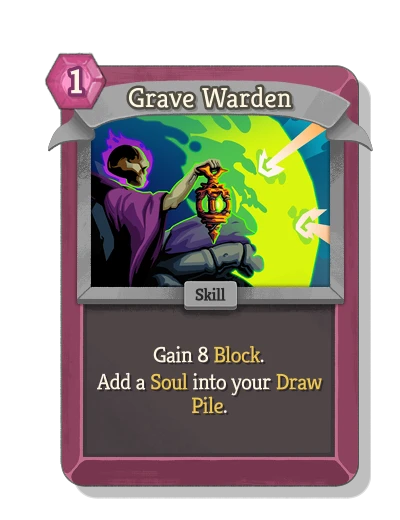
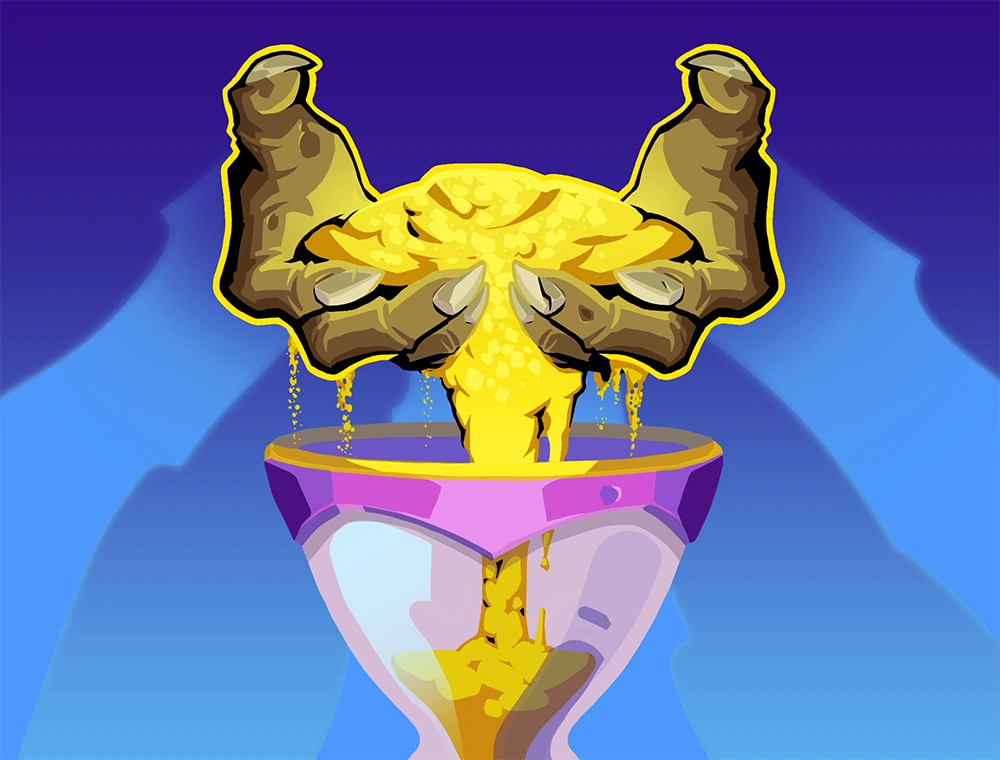
At launch, Necrobinder could repeatedly draw through a compact deck while a zero-Energy Borrowed Time supplied renewable Energy. The payment was Doom on the player. That version supported the Soul-loop guide published by 聶寶 / nielnieh345 on March 10, 2026. Current Borrowed Time uses a different resource model, so this recorded build belongs to the launch rules.
For a present-day deck, use Necrobinder Souls and the current Borrowed Time guide. The historical example explains why an old video shows a loop that the same card names no longer produce.
Launch package
The author’s compact package paired two Borrowed Times with Capture Spirit and a draw-access card such as Scourge. Souls supplied draws, while Haunt converted Soul plays into damage. The post also emphasized surviving the unfinished deck, using Ethereal cards or Exhaust to reduce combat clutter, and finding removal opportunities. It was a route assembled during a climb, rather than four cards that started every fight ready to repeat.
The loop depended on renewable access and renewable Energy. The historical zero-cost Energy card could return through a reshuffle without acquiring the current turn-wide tax, which is the premise that changed.
Launch versus current card text
| Piece | Role in the launch account | Current stable effect relevant to the engine |
|---|---|---|
| Borrowed Time | Reusable zero-Energy generator with a self-Doom payment. | Costs one, gains four Energy, and increases card costs by one for the turn; upgrade gains six. |
| Capture Spirit | Replenish the Soul supply. | Costs one; the enemy loses three HP and three Souls enter the draw pile. |
| Soul | Reach the next part of the package. | Costs zero before modifiers, draws two and Exhausts. |
| Haunt | Convert repeated Soul plays into enemy HP loss. | After setup, each played Soul makes a random enemy lose seven HP (six before v0.111.1); nine upgraded (eight before). |
The right-hand column is current stable text; it does not reconstruct every March card. In particular, do not combine the historical Borrowed Time cost with the current Energy gain to invent a zero-cost four-Energy generator.
Current Borrowed Time Energy budget
Consider only the Energy budget after one current base Borrowed Time. Paying one and receiving four gives a net gain of three. Three later cards each paying the extra one consume that entire advantage. An additional play costs another Energy before considering the card’s ordinary price.
That calculation does not prove that a present-day Necrobinder can never go infinite. It shows why the launch recipe cannot be established simply by replacing its Energy card with the current one. A repeatable loop needs its end state checked: Energy, hand, draw pile, discard pile, Exhaust pile, remaining generators and cost modifiers must permit another pass.
Capture Spirit places Souls in the draw pile rather than directly in hand. A Soul Exhausts after drawing. A sequence that spends all available Souls without renewing them eventually stops, even when it has drawn the original generator again. The draw-pile and reshuffle guide explains why access and permanent deck size are separate counts.
March 9 video chapters
The author’s accompanying March 9 video labels a boss demonstration at 1:15, early card choices at 5:57, and rare-card recommendations at 7:48. Those are the creator’s published chapter markers. The demonstration and the development of the deck answer different questions: seeing an established engine resolve does not mean its early fights were equally safe.
When comparing it with a current run, inspect Borrowed Time’s displayed text first. Then identify how the hand gets its first Soul, how played generators return, which cards leave combat through Exhaust, and where damage comes from.
The present-day Soul strategy still benefits from generation, draw and a payoff such as Haunt. Dirge can turn available Energy into summons and Souls under its current rules. Borrowed Time can support an expensive burst without reproducing the launch cycle.