The Sealed Throne gives one Star whenever you play a card. Two applications raise that to two. Particle Wall costs two Stars, gains nine Block and returns to hand. With both Powers established and at least two Stars available, its payment and refund balance: the Wall can be played again without consuming Energy or reducing the Star bank.
The Ancient card and a second application are both conditional finds, so keep enough immediate damage and defense to reach the Ancient and assemble the turn. Either card is playable on its own in a normal Regent deck.
One Throne versus two
Assume Particle Wall uses its base values, starts in hand, and costs its normal two Stars. There are no other Star gains, cost modifiers, card-play restrictions or enemy reactions. The enemy remains alive.
| Active Throne applications | Stars before Wall | Pay | Gain from the play | Stars afterward | Next Wall |
|---|
| One | 2 | 2 | 1 | 1 | Cannot pay the normal cost |
| Two | 2 | 2 | 2 | 2 | Can repeat |
A single Throne can still support several Walls from a larger bank. Starting at ten Stars permits nine consecutive normal-cost Walls before the bank reaches one, with no other gains. The two-application cycle supplies nine Block per play, or twelve with Particle Wall+.
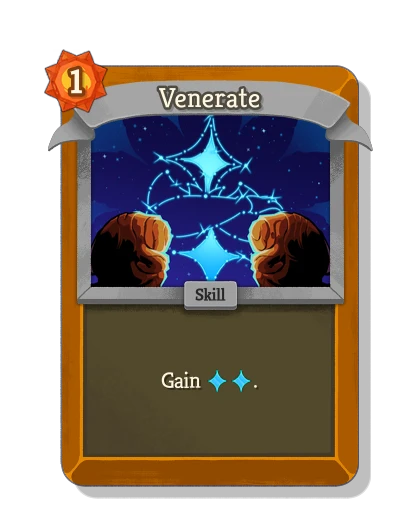
The two-Star entry requirement remains. Future refunds do not pay a cost before the card has been played. If the setup spends the last Stars, play an available generator before counting on the Wall. Venerate, existing turn-start generation and other cards can rebuild the bank, but their availability and costs belong in the setup plan.
Obtain the Ancient card, then the second application
Darv can offer Dusty Tome. Its character-specific Ancient card for the Regent is an upgraded Sealed Throne. Current Throne+ costs zero Energy and still costs three Stars. It does not gain Innate: early screenshots and old combo posts show a different upgrade.
Dolly’s Mirror can copy the Throne after it is in your deck. The Reflections event can duplicate the deck, but that option also adds Bad Luck and copies the cards you may not want doubled.
A Duplicator provides another route for one combat. Drink it immediately before playing the Throne, so the next-card effect applies the Power twice. An unrelated card played between the potion and Throne consumes that setup. The bottle is spent, so this establishes that combat’s engine without adding a second Throne to the permanent deck.
Pael’s Growth is also a possible copying route when the Throne is already available to enchant, but it needs the appropriate encounter order and a later Clone action. It cannot enchant a Throne that has not yet been obtained. Do not plan an ordinary run around receiving both particular Ancients in the necessary order.
Turn repeatable Block into a finish
Letter Opener deals five damage to every enemy after three Skills in a turn. Starting from zero Skill plays, three normal Particle Walls give 27 Block and one five-damage trigger, while the two-Throne Star bank returns to its starting amount. An upgraded Wall raises that Block total to 36. Existing Skill counts change when the next trigger occurs.
Black Hole triggers on each Star payment and each Star gain, and every Wall play produces one of each. Count transactions, rather than multiplying the Power’s damage by the size of the bank. The Black Hole reference explains that trigger distinction.
Make It So returns after every three Skills and provides another attack. Its play can also generate Stars through the Throne. Lunar Blast benefits from the Skill count, while Radiate benefits from Stars gained during the turn. The Wall cycle does not draw these attacks.
Shops, removal and setup turns
Before a second Throne application appears, treat Particle Wall as Star-funded defense. Evaluate another copy, a duplication item or a potion by whether the current deck can find and deploy the necessary cards. The existing Star Regent build supplies a broader plan for turns that never assemble the rare package.
Keep an immediate attack or a reachable damage payoff; repeated Walls deal no damage without one. Drawing the payoff may require leaving the established cycle, with different hand-space and resource consequences.
Encounter and card-play limits
Velvet Choker limits the number of cards played each turn, so it does not permit unrestricted Wall repetition. Normality and enemy reactions can impose different limits. Tainted Skills against Infested Prism add an encounter-specific surcharge; calculate the actual turn instead of crediting only the printed Block.
A temporary source of two Throne applications ends with the combat. Reassemble it in later fights or return to the deck’s normal damage and defense. Do not weaken early rewards in anticipation of the Ancient.